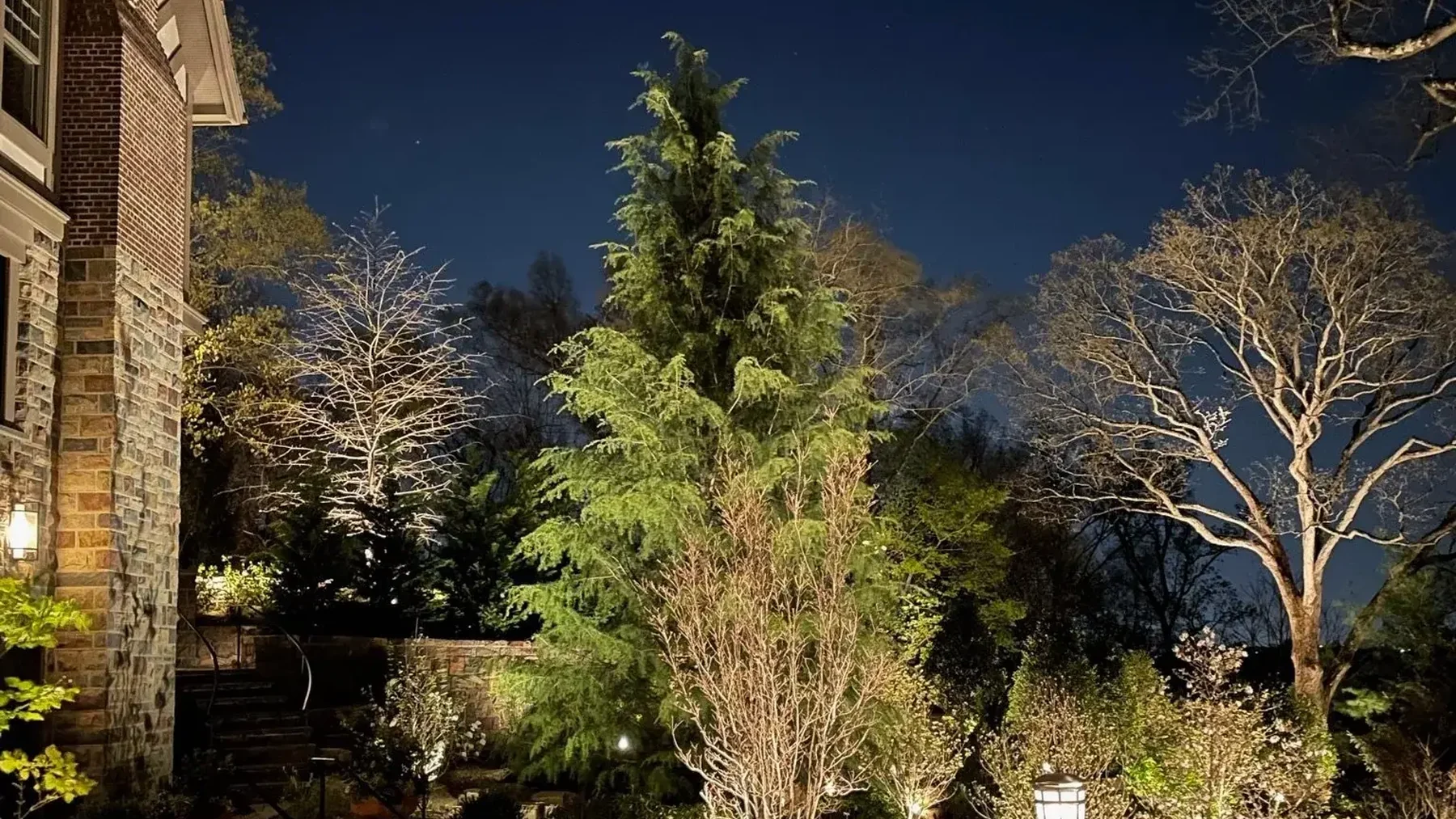
Pathway lighting is where landscape lighting earns its keep twice over: it makes your Franklin home safer to move around after dark and more beautiful at the same time. Well-lit walks, steps, and garden paths guide guests to the door, prevent stumbles on the way to the car, and trace the lines of your landscaping with a soft, welcoming glow. Done poorly, though, path lighting turns into a harsh row of glaring fixtures that looks like an airport runway. This guide covers how to do pathway lighting right in Williamson County, the fixture options, and what it costs.
The best pathway lighting serves both purposes at once. On the safety side, it illuminates changes in elevation, steps, walkway edges, and slopes, so no one misjudges a step on the way in or out, which matters on the sloped lots and long walks common around Franklin and Leiper's Fork. On the beauty side, it defines the geometry of your yard at night, drawing the eye along a path and highlighting the plantings alongside it. When a designer balances the two, you get lighting that is genuinely useful and quietly elegant rather than merely functional.
The most common pathway lighting mistake is lining a walk with identical fixtures spaced evenly like landing lights. It is bright, yes, but it is also monotonous and glaring, and it flattens the very landscaping it should flatter. The fix is restraint and variation: spacing fixtures further apart so pools of light overlap gently rather than forming a continuous glare strip, staggering them rather than marching them in a rigid line, and mixing path lights with other techniques. Good pathway lighting lights the path, not your eyes, and leaves comfortable shadow between the pools of light, which is what makes it feel designed.
You have more tools than the classic staked path light. Traditional path fixtures cast a soft circle of light downward onto the walk and are the workhorse of the category. Downlighting, or moonlighting, places fixtures up in trees or on the house to cast a broad, dappled wash over a path from above, mimicking natural moonlight, a beautiful, glare-free effect that works wonderfully under the mature trees of established Williamson County properties. Step lights and recessed fixtures built into hardscape illuminate stairs and retaining walls directly and disappear during the day. The best walkways often combine these so the lighting feels layered rather than repetitive.
Getting the details right is what separates a professional result. Fixtures are typically spaced several feet apart, with the exact distance tuned to the fixture's beam and the effect you want, and aimed and shielded so the light falls on the ground rather than into eyes. Warm LED bulbs at a modest brightness create an inviting glow; over-bright fixtures ruin the mood and cause glare. Fixture quality matters enormously for longevity, too: solid brass and copper fixtures develop a handsome patina and last for decades in our humid climate, while cheap aluminum and plastic corrode and fade within a few years. For guidance on reducing glare and light pollution, DarkSky International offers homeowner resources at darksky.org.
Cost depends mostly on the number of fixtures, their quality, and the length of cable runs. A short front walk needs only a handful of fixtures, while lighting long paths, steps, and garden routes across a larger Brentwood or Thompson's Station property adds fixtures and wiring. The biggest cost lever is fixture quality: durable brass and copper fixtures cost more upfront than budget aluminum but last far longer and look better doing it, making them the better value over time. Pathway lighting is usually one component of a full landscape lighting design, so it is often quoted as part of the larger system. Our Franklin landscape lighting cost guide breaks down pricing across the whole project.
Because path fixtures sit low and take direct exposure to rain, irrigation, mowing, and foot traffic, durability is not optional here. Our humid summers and freeze-thaw winters are hard on flimsy fixtures and poor connections. A quality low-voltage system uses weatherproof connectors, buried cable rated for the conditions, and solid metal fixtures that shrug off the moisture. Proper installation also keeps fixtures clear of mower blades and string trimmers, a common cause of damage, and positions them where irrigation will not undermine them. Built right, pathway lighting keeps performing beautifully year after year.
Pathway lighting shines brightest as part of a complete plan. It handles safe movement at ground level while uplighting adds drama to trees and the facade, accent lighting highlights features, and, if you have it, security lighting covers the perimeter. Running them together on a timer or smart control means the whole property lights up each evening as one composition. If security is also on your mind, our outdoor security lighting guide pairs naturally with pathway design for a home that is both safe and stunning after dark.
When we walk a Franklin property, a few spots almost always call for pathway lighting first. The front walk from the driveway or street to the door is the priority, both for safe, welcoming arrival and for the curb appeal that greets guests and passersby. Steps of any kind are next, since a missed step is the most common cause of a nighttime fall, and even a single riser deserves its own light or a nearby fixture that reveals it clearly. The path from the house to a detached garage or parking area matters for everyday coming and going, especially in the darker months. Garden and side-yard paths that connect a patio to a fire pit, pool, or seating area benefit from softer, more decorative lighting that invites people to wander the space at night. And transitions where a walk changes direction or material, brick to stone, flat to sloped, are worth marking so the change registers underfoot. On the larger, wooded lots common around Arrington, College Grove, and Leiper's Fork, longer approach paths and driveways can also use gentle lighting to guide the way without feeling commercial. Prioritizing these high-use, higher-risk spots first means your budget goes where it does the most good, and additional decorative pathway lighting can always be layered in later as part of the same low-voltage system, since it is easy to expand once the transformer and main runs are in place.
We are glad to help you prioritize those spots and design a walkway lighting plan that grows with your yard.
Great pathway lighting quietly does two jobs at once: it keeps everyone sure-footed after dark and it makes your Franklin landscape glow. The keys are avoiding the runway look with thoughtful spacing and variation, mixing path lights with downlighting and step lights, choosing warm and appropriately bright LEDs, and investing in durable brass or copper fixtures that survive our climate. When you are ready to light your walks and gardens beautifully, we would love to design a system that fits your home and lasts for years.
Space fixtures further apart so their pools of light overlap gently instead of forming a continuous glare strip, stagger them rather than lining them up rigidly, and mix path lights with downlighting from trees and step lights. Good pathway lighting lights the walk, not your eyes, and leaves comfortable shadow between the pools of light so it feels designed rather than like landing lights.
Solid brass and copper fixtures. They develop an attractive patina and last for decades in our humid, freeze-thaw climate, while cheap aluminum and plastic corrode and fade within a few years. They cost more upfront but are the better value over time, especially for low fixtures exposed to rain, irrigation, and mowing.
Why Fixture Quality Matters in Middle Tennessee's Climate — Custom landscape lighting designed, installed, and serviced across Franklin and Williamson County.