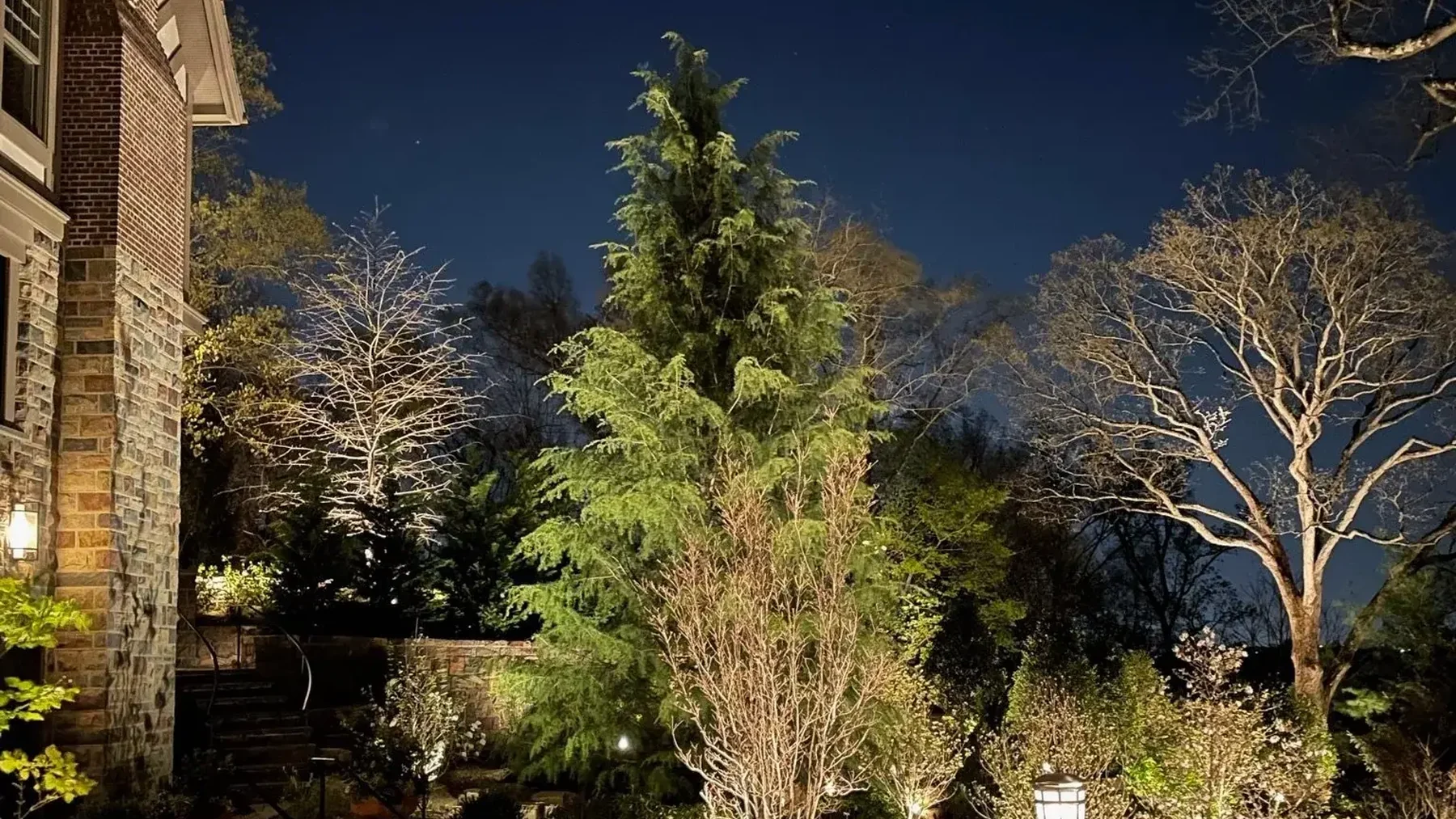
Downtown Franklin is one of the most beautiful historic districts in Middle Tennessee, and its homes — Victorian, Federal, and antebellum, set among mature trees and established gardens — carry a character no new construction can replicate. Lighting a historic home well is a different art than lighting a new build in Westhaven or Cool Springs. Done thoughtfully, landscape lighting reveals the craftsmanship, the porches, the columns, and the grand old trees that make these properties special, and it does so while respecting the fabric of the home. Done carelessly, harsh modern lighting flattens all that character. This guide covers how we approach landscape lighting for Franklin’s historic homes so the result honors the architecture.
Period architecture was designed for softer light — gas lamps and candlelight — and it responds beautifully to warm, low-level illumination. Blast a historic facade with bright, cool floodlights and you erase the very shadows and texture that give it depth. Our approach on downtown Franklin homes is restraint: layered, warm light that grazes across brick and stone to reveal texture, gently uplights columns and gables, and lets the architecture breathe. The goal is to make the home look like it is glowing from within its own era, not spotlit like a billboard. Less, placed precisely, is almost always more with these houses.
A core principle with historic homes is protecting the structure. Wherever possible we light the facade from the ground — well-placed uplights and grazing fixtures in the beds — rather than mounting hardware on original masonry, siding, or trim. That preserves the home’s materials and keeps the daytime appearance clean, with no visible fixtures marring the architecture. When a fixture must go on the house, we choose discreet placements and mounting methods that minimize any impact. Respecting the building fabric is not just courtesy; in a district that values preservation, it is the right way to work.
The front porch is the heart of a historic Franklin home, and it deserves to be a focal point after dark. Soft lighting that highlights the porch, the columns, and the front door draws the eye to the architectural heart of the house and creates a warm, welcoming glow from the street. We layer gentle downlighting and accents so the porch reads as inviting rather than harshly lit, and we take care that the light flatters the paint colors and materials period homes are known for. A beautifully lit entry is often the single most striking part of a historic home’s nighttime presence.
Historic properties usually come with what new lots lack: enormous, established trees and mature gardens. These are gifts for a lighting designer. Uplighting a grand old oak or maple in a downtown Franklin yard creates drama and depth, and moonlighting — placing fixtures high in a tree to cast dappled light down through the canopy — mimics natural moonlight over the garden and paths below. We light the landscape as carefully as the house, because on a historic property the grounds and the architecture are one composition, and the trees are often as much a part of the home’s identity as the building itself.
Nothing dates or cheapens a historic home faster than the wrong color of light. Cool, bluish LEDs look modern and clinical and fight everything a period home stands for. We use warm-white light, in the range that flatters brick, stone, and painted wood and reads as candle-like and timeless. Consistency matters too — mismatched color temperatures across a property look accidental. Getting the warmth right is one of the most important decisions in lighting a historic home, and it is the difference between a house that glows with character and one that looks harshly floodlit.
The best landscape lighting is felt, not seen — you notice the beautiful home, not the fixtures. On historic properties this discretion matters double. We conceal fixtures in beds, behind plantings, and in the landscape so that by day the yard looks untouched and by night the light simply appears. Quality low-voltage systems with well-hidden, durable fixtures keep the technology invisible and let the architecture and gardens take center stage. That invisibility is a craft in itself, and it is what separates a thoughtfully lit historic home from one dotted with obvious hardware.
Historic homes still need practical light — safe steps, a lit path to the door, a secure feel after dark — and the art is delivering it without compromising the aesthetic. We integrate subtle path and step lighting that keeps guests safe on the uneven walks common to older properties while keeping the overall effect soft and elegant. Preservation-minded resources like the National Park Service’s historic preservation guidance reinforce the principle of enhancing without altering, which is exactly the balance we strike between beauty, safety, and honoring the home.
A historic home in downtown Franklin is a piece of Middle Tennessee’s story, and it deserves lighting designed with that in mind — warm, restrained, invisible by day, and glowing with character by night. The result is a property that turns heads on an evening stroll through the district and honors the craftsmanship of the era it came from. If you own a historic or period home in Franklin and want lighting that enhances rather than overpowers its character, we would love to design a plan tailored to your home’s architecture and grounds.
Middle Tennessee’s humid summers and wet spells are part of designing a lighting system that lasts on a historic property. We specify sealed, corrosion-resistant fixtures and quality connections that hold up to Franklin’s moisture, so a system installed to honor a home does not turn into a maintenance headache a few seasons later. Mature, dense plantings around older homes also grow fast in our climate and can quickly block a carefully aimed fixture, so we plan placements and offer seasonal adjustments to keep the design looking as intended. Building for the local climate protects both the appearance and the investment, which matters especially on a home you intend to care for over the long term.
Yes. Low-voltage landscape lighting is minimally invasive — fixtures sit in the beds and lawn, and wiring is buried shallow, so nothing is bolted through historic masonry or original siding when it can be avoided. We plan runs to protect mature root systems and period materials, and we can wash a facade beautifully from the ground rather than mounting hardware on the house itself. Preserving the home’s fabric is part of the design.
Warm, soft, and restrained. Historic architecture looks best under warm-white light that flatters brick, stone, and painted wood, with gentle grazing and uplighting that reveals texture and detail rather than blasting the whole facade flat. The goal is to enhance the character that makes these homes special — the columns, the porch, the old trees — not to make them look like a modern showpiece.
Why Fixture Quality Matters in Middle Tennessee's Climate — Custom landscape lighting designed, installed, and serviced across Franklin and Williamson County.