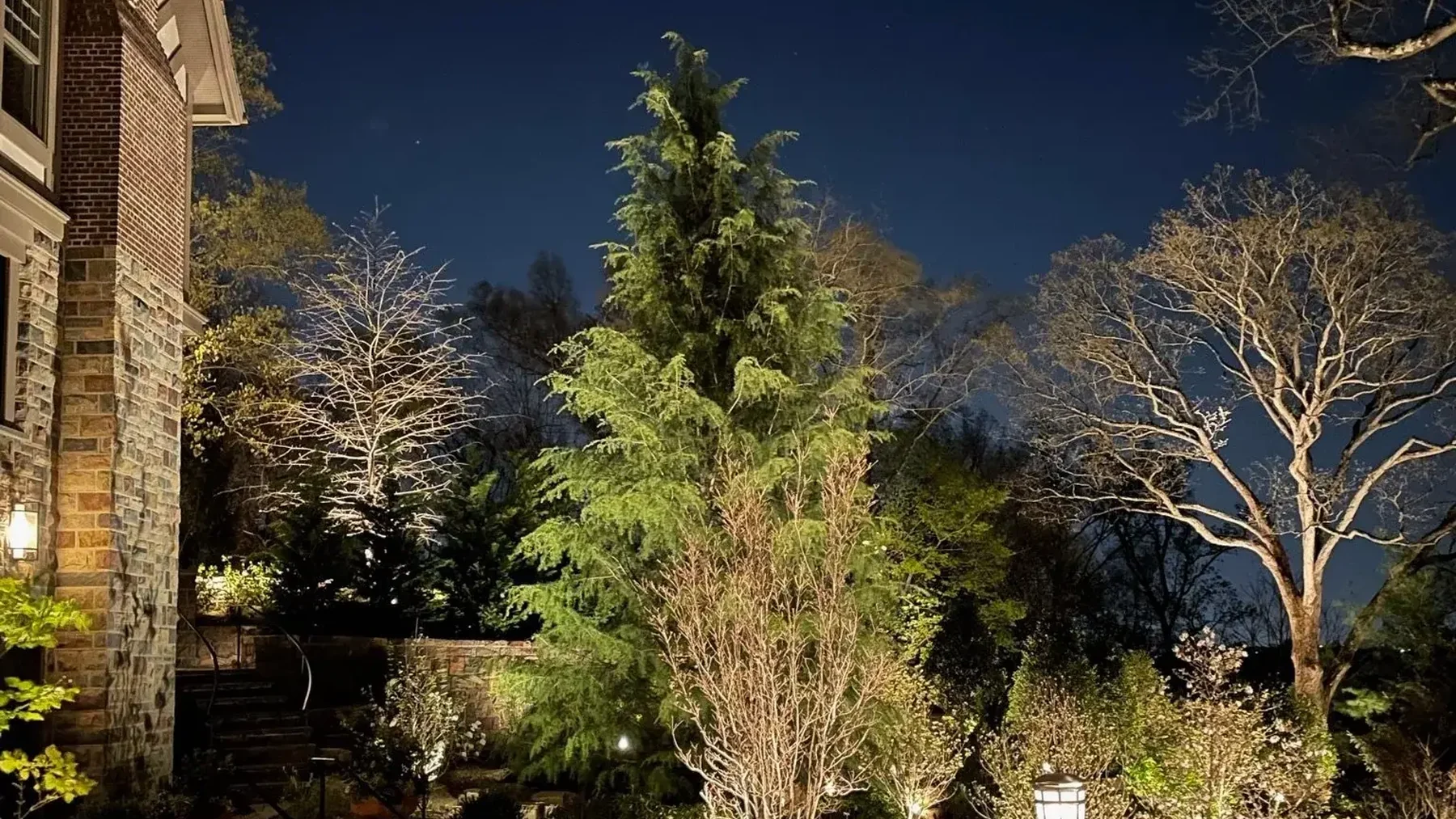
When people plan landscape lighting they think about where the fixtures go and how bright they are, but they rarely think about color temperature, and that is the detail that quietly determines whether the finished result looks warm and inviting or cold and clinical. For Franklin homes, where curb appeal carries real weight, choosing the right color temperature is as important as choosing the fixtures themselves. Here is what warm versus cool light actually does, and how we choose for Williamson County properties.
Color temperature is measured in Kelvin, and lower numbers are warmer while higher numbers are cooler. Around 2700K gives a soft, warm, candle-to-incandescent glow; 3000K is a slightly crisper warm white; 4000K and up moves into cool, bluish white. That single specification changes the entire feel of a lighting scene, and it is set the moment you choose your bulbs or fixtures, so it is worth getting right from the start.
For residential landscape lighting, warmer tones almost always create the more welcoming, high-end look. Warm white around 2700K to 3000K flatters the brick, stone, and wood of a typical Franklin home, makes gathering spaces feel cozy, and reads as elegant rather than institutional. It is the color of light people instinctively associate with comfort and hospitality, which is exactly the impression you want your home to give at night.
The material you are lighting changes how a color temperature reads, and this is where local knowledge helps. Warm brick and tan stone, common on Williamson County homes, come alive under warm light and can look flat or gray under cool light. Cool white can make red brick look muddy. On the other hand, very white modern stucco or light gray stone can sometimes take a slightly cooler tone. We match the color temperature to your home's actual materials rather than applying a one-size-fits-all setting.
Greenery has its own relationship with light color. Warm light renders most foliage and mulch in a natural, pleasant way, while cool light can wash the life out of plantings or, in some cases, make certain green leaves pop. A common professional move is keeping the whole scene warm for cohesion while using color temperature deliberately where it enhances specific plants. The goal is a landscape that looks natural and lush after dark, not artificial.
Cool white is not wrong everywhere. It can suit contemporary architecture, certain security applications where a crisp, alert quality is desired, and the occasional dramatic accent on a specific feature. The mistake is using cool light as the default for an entire home; used as a targeted tool rather than the base tone, it has its place. Most Franklin homes, though, are best served with warm as the foundation.
One of the most common and jarring mistakes is mixing color temperatures across a yard, a warm porch light next to a cool path light next to a bluish flood. The eye immediately reads the inconsistency as cheap or unplanned. A professional design keeps the color temperature consistent across the property so the whole scene feels intentional and cohesive. This is one of the easiest ways to tell a designed system from a piecemeal one.
Because the right choice depends on your home's materials, landscaping, and the mood you want, the best way to decide is to see it. We often demonstrate color temperatures on your actual home at night so you can see how warm light plays on your specific brick or stone before committing. For most Franklin properties the answer is a consistent warm white, but we tailor it to what makes your home look its best. For more on lighting fundamentals, the Illuminating Engineering Society is an authoritative resource.
Many Williamson County neighborhoods, from Westhaven to the newer Cool Springs area communities, have HOA guidelines that touch on exterior lighting, and consistency of warm, understated light usually aligns well with what these associations prefer. Harsh, cool, or overly bright lighting is more likely to draw a complaint or run afoul of the rules. Choosing a tasteful warm white not only looks better on your home, it tends to keep you comfortably within neighborhood standards. We are familiar with how local HOAs approach lighting and design with those expectations in mind so your installation looks great and stays trouble-free.
Expert landscape lighting design across Franklin, Brentwood, Leipers Fork, and Williamson County.
For most homes, warm white around 2700K to 3000K. It flatters the brick, stone, and wood common on Williamson County homes and creates a welcoming, high-end look. Cool white is best reserved for targeted accents or modern architecture.
Significantly. Warm light makes brick and stone glow and feels inviting, while cool light can make the same materials look flat or muddy. Keeping one consistent color temperature across the property is what makes a design look intentional.
Why Fixture Quality Matters in Middle Tennessee's Climate — Custom landscape lighting designed, installed, and serviced across Franklin and Williamson County.
When people plan landscape lighting they think about where the fixtures go and how bright they are, but they rarely think about color temperature, and that is the detail that quietly determines whether the finished result looks warm and inviting or cold and clinical. For Franklin homes, where curb appeal carries real weight, choosing the right color temperature is as important as choosing the fixtures themselves. Here is what warm versus cool light actually does, and how we choose for Williamson County properties.
Color temperature is measured in Kelvin, and lower numbers are warmer while higher numbers are cooler. Around 2700K gives a soft, warm, candle-to-incandescent glow; 3000K is a slightly crisper warm white; 4000K and up moves into cool, bluish white. That single specification changes the entire feel of a lighting scene, and it is set the moment you choose your bulbs or fixtures, so it is worth getting right from the start.
For residential landscape lighting, warmer tones almost always create the more welcoming, high-end look. Warm white around 2700K to 3000K flatters the brick, stone, and wood of a typical Franklin home, makes gathering spaces feel cozy, and reads as elegant rather than institutional. It is the color of light people instinctively associate with comfort and hospitality, which is exactly the impression you want your home to give at night.
The material you are lighting changes how a color temperature reads, and this is where local knowledge helps. Warm brick and tan stone, common on Williamson County homes, come alive under warm light and can look flat or gray under cool light. Cool white can make red brick look muddy. On the other hand, very white modern stucco or light gray stone can sometimes take a slightly cooler tone. We match the color temperature to your home's actual materials rather than applying a one-size-fits-all setting.
Greenery has its own relationship with light color. Warm light renders most foliage and mulch in a natural, pleasant way, while cool light can wash the life out of plantings or, in some cases, make certain green leaves pop. A common professional move is keeping the whole scene warm for cohesion while using color temperature deliberately where it enhances specific plants. The goal is a landscape that looks natural and lush after dark, not artificial.
Cool white is not wrong everywhere. It can suit contemporary architecture, certain security applications where a crisp, alert quality is desired, and the occasional dramatic accent on a specific feature. The mistake is using cool light as the default for an entire home; used as a targeted tool rather than the base tone, it has its place. Most Franklin homes, though, are best served with warm as the foundation.
One of the most common and jarring mistakes is mixing color temperatures across a yard, a warm porch light next to a cool path light next to a bluish flood. The eye immediately reads the inconsistency as cheap or unplanned. A professional design keeps the color temperature consistent across the property so the whole scene feels intentional and cohesive. This is one of the easiest ways to tell a designed system from a piecemeal one.
Because the right choice depends on your home's materials, landscaping, and the mood you want, the best way to decide is to see it. We often demonstrate color temperatures on your actual home at night so you can see how warm light plays on your specific brick or stone before committing. For most Franklin properties the answer is a consistent warm white, but we tailor it to what makes your home look its best. For more on lighting fundamentals, the Illuminating Engineering Society is an authoritative resource.
Many Williamson County neighborhoods, from Westhaven to the newer Cool Springs area communities, have HOA guidelines that touch on exterior lighting, and consistency of warm, understated light usually aligns well with what these associations prefer. Harsh, cool, or overly bright lighting is more likely to draw a complaint or run afoul of the rules. Choosing a tasteful warm white not only looks better on your home, it tends to keep you comfortably within neighborhood standards. We are familiar with how local HOAs approach lighting and design with those expectations in mind so your installation looks great and stays trouble-free.
Why Fixture Quality Matters in Middle Tennessee's Climate — Custom landscape lighting designed, installed, and serviced across Franklin and Williamson County.