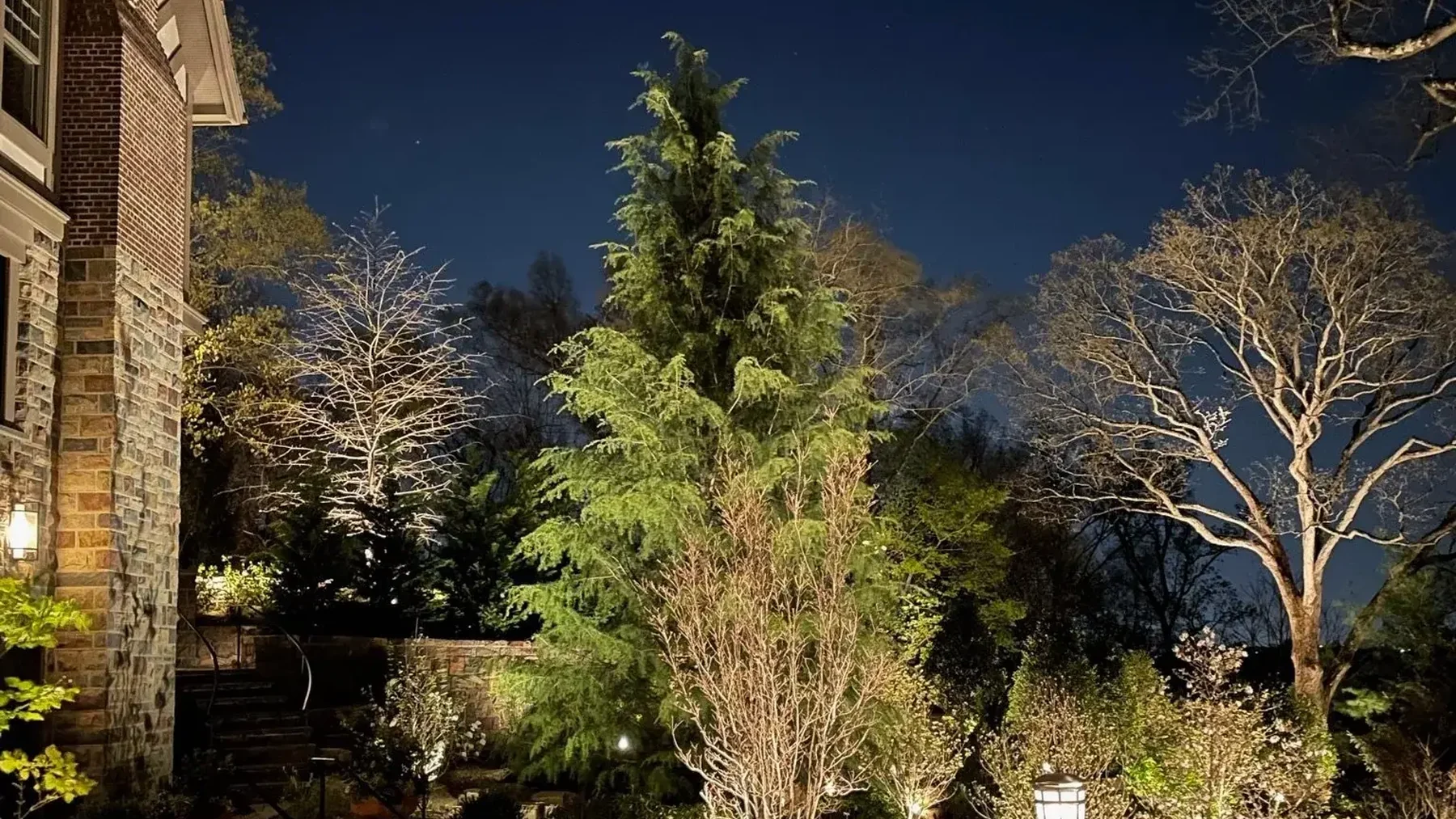
Williamson County is full of beautiful planned communities — Westhaven, Fieldstone Farms, the estates around Leiper’s Fork, and the newer developments filling in around Cool Springs, Nolensville, and Spring Hill — and most of them come with a homeowners association and a set of architectural guidelines. If you are dreaming of landscape lighting for your Franklin-area home, one of the first practical questions is what your HOA will allow. The good news is that tasteful landscape lighting is almost always welcome; HOAs generally want to encourage the polished, cohesive look it creates. The key is understanding your community’s rules and designing within them. This guide explains how HOA guidelines typically treat landscape lighting and how to get your project approved smoothly.
Homeowners associations exist to protect property values and neighborhood character, and exterior lighting affects both. A cohesive, warm, well-designed lighting scheme across a community looks upscale and intentional; a mishmash of glaring floodlights, colored bulbs, and light spilling into neighbors’ windows does the opposite. That is why many Williamson County communities set standards for exterior and landscape lighting. Understanding that the HOA’s goal aligns with yours — a beautiful, tasteful result — reframes the rules as a shared standard rather than an obstacle. Good landscape lighting is precisely the kind of upgrade these guidelines are designed to promote.
While every community’s covenants differ, most HOA lighting rules address a similar handful of concerns. Brightness and glare come up often, with limits meant to keep light from bothering neighbors. Color temperature is frequently addressed, with many associations favoring warm white and discouraging harsh cool or colored light. Rules may cover how visible fixtures can be, whether light can cross property lines onto adjacent lots or the street, and sometimes the style of any visible hardware. Reviewing your specific declaration of covenants for the exterior lighting section is the essential first step, and it is one we help clients do.
In many Franklin-area communities, exterior improvements require submitting a plan to an architectural review committee before work begins. For landscape lighting, that usually means providing a description or drawing of what you intend to install and where. This is where working with an experienced local designer pays off: we prepare plans that clearly show a tasteful, compliant design, which makes committee approval far more likely and faster. Skipping this step and installing without approval risks being asked to remove or modify the work, so it is always worth doing properly from the start in an HOA neighborhood.
Here is the reassuring truth: the kind of landscape lighting most homeowners actually want is exactly what HOAs permit. Low-voltage systems with warm-white light, fixtures hidden in the beds, gentle uplighting on trees and architecture, and soft path lighting are restrained by nature. They add elegance without glare, keep light on your own property, and hide the hardware — checking every box a typical Williamson County HOA cares about. The rules mostly rule out the garish, not the beautiful, so a well-designed plan almost never has to be compromised to comply.
Beyond the written rules, good landscape lighting respects the neighbors, which is part of living well in a close Williamson County community. We aim fixtures to light your home and landscape without throwing glare into a neighbor’s bedroom window or across the street, use shielding where needed, and keep brightness at a tasteful level. This neighborly approach not only keeps you in good standing with the HOA but reflects the broader move toward responsible outdoor lighting championed by groups like DarkSky International. Lighting that is beautiful and considerate is the standard we design to.
The path is straightforward when you plan for it. We start by reviewing your community’s guidelines, design a plan that fits both your vision and the rules, and help you present it to your architectural committee if approval is required. Once you are cleared, installation is clean and unobtrusive. Homeowners across Franklin, Brentwood, Nolensville, and Spring Hill trust us to navigate this process so their lighting enhances the home and keeps the HOA happy. If you want landscape lighting but are unsure what your community allows, reach out and we will help you design something beautiful and fully compliant.
A few issues trip homeowners up more than others in Williamson County communities. Overly bright or numerous fixtures are a frequent flag; the fix is a designed plan with the right number of well-placed lights rather than a scattering of bright floods. Cool or colored bulbs are another common no; sticking to warm white solves it instantly. Light trespass onto a neighbor’s lot or the street draws complaints; careful aiming and shielding keep light where it belongs. And visible, mismatched hardware can look unapproved; concealing quality fixtures in the landscape keeps the daytime view clean. Nearly every HOA concern has a straightforward design answer, which is why a professional plan rarely runs into trouble.
In some Franklin-area developments, particularly those with townhomes or shared frontages, there are additional wrinkles about what counts as your space versus common area. Lighting within your own beds and yard is usually your call within the guidelines, while anything touching shared landscaping or community frontage may need extra sign-off. We help clarify these boundaries up front so your plan stays entirely within what you control, avoiding any conflict with the association’s maintenance of common areas. Knowing exactly where your property lines and responsibilities sit is part of designing a plan that gets approved without back-and-forth.
Not all lighting installers know the Williamson County communities, and that local familiarity is worth a great deal. Having worked in these neighborhoods, we know the kinds of standards Westhaven, Fieldstone Farms, and the newer Cool Springs and Spring Hill developments tend to set, and we design accordingly from the first sketch. That means fewer surprises, smoother approvals, and a finished result that looks right at home on your street. When you are investing in landscape lighting for an HOA property, choosing a designer who understands both beautiful lighting and the local rules is the surest way to a result you love and an association that approves it.
Often, yes. Many Williamson County communities like Westhaven, Fieldstone Farms, and the newer Cool Springs and Nolensville developments have architectural guidelines that cover exterior lighting. Some require submitting a plan to an architectural review committee, others simply set standards you must meet. We help homeowners understand their specific covenants and prepare a plan that sails through approval rather than getting flagged.
Common rules address brightness and glare that could bother neighbors, color temperature (many favor warm white and discourage harsh or colored light), fixture visibility, and anything that shines onto adjacent properties or the street. Low-voltage, tastefully aimed, warm landscape lighting almost always fits within these standards — it is exactly the restrained, high-end look most Williamson County HOAs are trying to encourage in the first place.
Why Fixture Quality Matters in Middle Tennessee's Climate — Custom landscape lighting designed, installed, and serviced across Franklin and Williamson County.