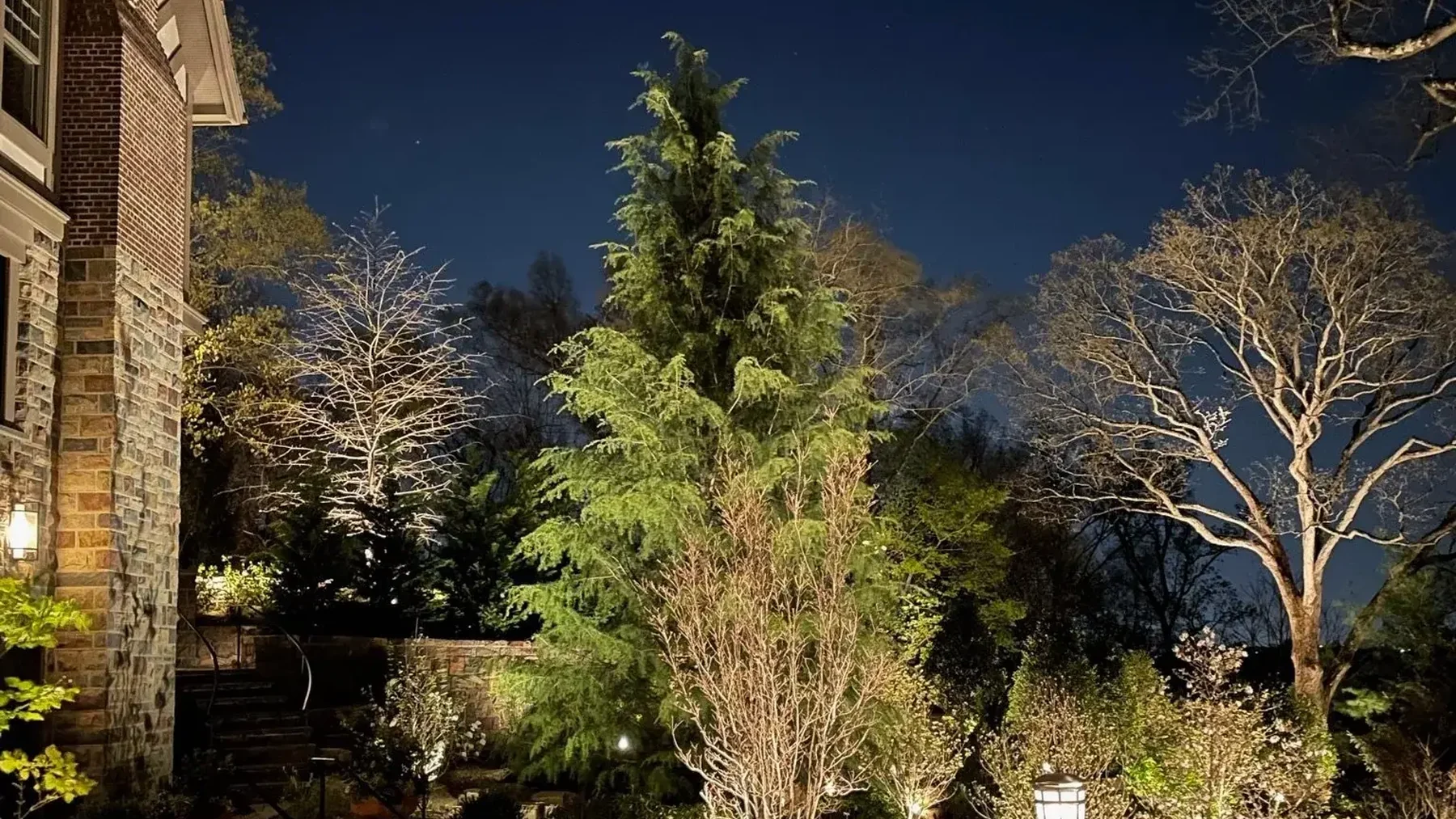
Landscape lighting is one of those things that looks effortless when it is done well and painfully obvious when it is not. Drive through Franklin after dark and you can spot the difference instantly: some homes glow with a soft, layered elegance, while others are lit like a used-car lot. The gap between them is design, not budget. A thoughtfully designed system on a modest Williamson County yard outshines an expensive pile of fixtures scattered without a plan. Here are the design principles the pros use to light a Franklin home beautifully.
Good lighting design begins by choosing the stars of the show, not by buying fixtures. Walk your property and pick the features worth showcasing: a mature oak, the stone or brick facade, an interesting rooflined gable, a specimen planting, the front walk. In Franklin's mix of historic homes and newer builds around Cool Springs and Westhaven, the architecture usually deserves to be the lead. Once you know what you are lighting and why, the fixture choices fall into place. Lighting everything equally, by contrast, means highlighting nothing.
The secret to that expensive-looking glow is layering. Professionals combine uplighting to graze a facade or tree, downlighting or moonlighting from high in a canopy for a soft, natural wash, path lights for safe passage, and the occasional accent to punctuate a focal point. Mixing these techniques at different brightness levels creates depth and shadow, which is what makes a scene feel dimensional rather than flat. Darkness is a design tool here; the unlit areas between highlights are what give the lit ones their drama.
Nothing cheapens a lighting scheme faster than glare, a bare bulb blasting into your eyes as you walk up. The goal is to see the light, not the fixture. Good design tucks fixtures into beds, behind plantings, or up in trees, uses shrouds and glare guards, and aims lights so the source stays hidden while the effect shows. On the flat, open front yards common in Williamson County, careful aiming and concealment are what separate a refined installation from a harsh one.
Color temperature and consistency quietly make or break a design. Warm white tones in the 2700K range flatter Franklin's traditional brick and stone and feel inviting, while cooler light can look stark and clinical on a home. Keeping the color temperature consistent across the property prevents the patchwork look of mismatched bulbs. Above all, restraint rules: the most elegant Williamson County landscapes use fewer, better-placed lights than homeowners expect, trusting contrast and shadow to do the work.
Finally, the best design fits both the architecture and the neighborhood. A historic downtown Franklin home wants a gentler, more classic treatment than a large new build with bold rooflines. Many local HOAs, from Westhaven to Brentwood communities, have preferences or rules on brightness and fixture style, so a design that respects the setting stays tasteful and trouble-free. When lighting is planned around the specific home, the specific plantings, and the specific street, it stops looking like a product and starts looking like part of the house. For lighting design principles, the American Lighting Association offers homeowner guidance at americanlightingassoc.com.
Overdoing it. The most common mistake we correct on Williamson County homes is too many fixtures at the same brightness, which flattens the yard and creates a runway effect instead of depth. Good design uses fewer, well-placed lights at varied intensities to create contrast, letting darkness frame the highlights. Restraint almost always looks more expensive than excess.
It helps to be aware of the setting. Many Franklin and Brentwood neighborhoods have an HOA, and some have guidelines on fixture style, brightness, or color temperature, so it is worth checking before you design. Beyond rules, a design that complements the architecture of your home and the character of streets like those in Westhaven or historic downtown reads as tasteful rather than jarring.
Why Fixture Quality Matters in Middle Tennessee's Climate — Custom landscape lighting designed, installed, and serviced across Franklin and Williamson County.