Home > Blog > Maintenance
Maintenance • August 24, 2026
Landscape Lighting Repair: Common Issues in Franklin
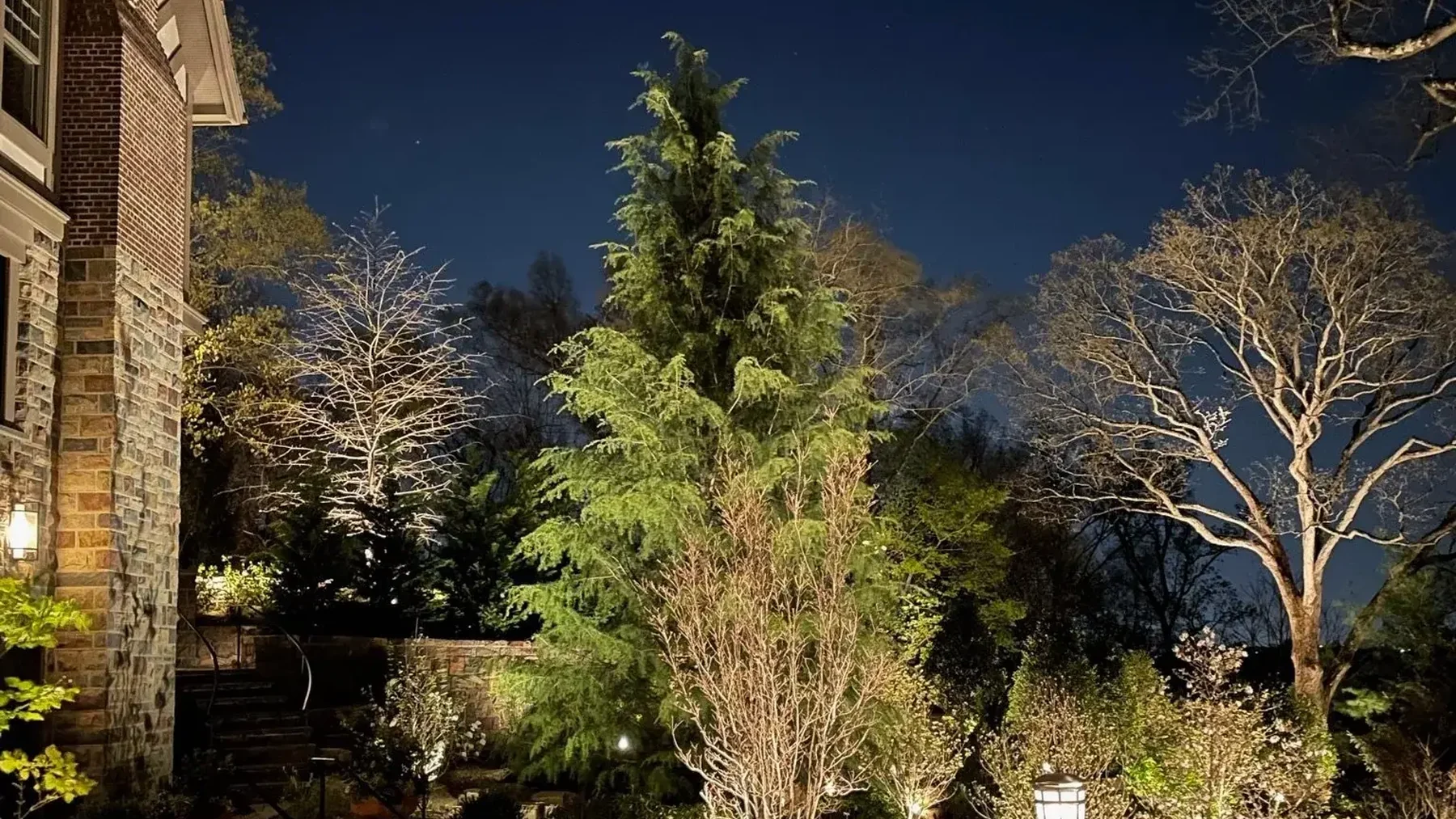
A landscape lighting system is exposed to the elements every day, buried in the ground and soaked by Middle Tennessee humidity, so even a good installation eventually needs repair. When a section goes dark, lights flicker, or fixtures dim, it is frustrating, but the causes are usually well understood and fixable. Here are the most common landscape lighting problems we see across Franklin and Williamson County, what causes them in our climate, and how they get resolved.
By far the most common failure in our area is corroded low-voltage connections. The wire splices that join fixtures to the main line sit in the ground, and years of Middle Tennessee moisture eventually corrode cheap or improperly sealed connectors, cutting power to everything downstream. When a whole section goes dark, this is usually why. The fix is to find the bad connection and redo it with a proper waterproof connector, and upgrading old connections is often the cure for a chronically troubled system.
The transformer is the heart of a low-voltage system, converting household power to the safe low voltage the lights run on. When it fails or trips, everything on that circuit goes out at once. Causes range from an overloaded transformer, too many fixtures added over time, to age, moisture intrusion, or a tripped breaker. Diagnosing whether the transformer itself has failed or is simply overloaded determines whether it needs resetting, repair, or replacement.
Individual lights that go out while their neighbors work usually point to a failed bulb or fixture. Older halogen systems burn through bulbs regularly, which is one reason so many Franklin homeowners convert to long-lasting LED. Fixtures themselves also age, especially inexpensive ones, with lenses clouding and housings cracking after years in the sun and rain. Replacing a bulb or a tired fixture is straightforward, and upgrading failing halogen fixtures to LED often solves recurring outages for good.
Moisture is the enemy of any outdoor electrical system, and our humid summers and frequent rain give it plenty of opportunity. Water gets into poorly sealed fixtures, connections, and sometimes the transformer, causing corrosion, shorts, and outright failures. Fixtures that fog up inside or connections that corrode are telling you moisture is getting where it should not. Proper sealing and, where needed, better-quality weather-resistant components keep water out and the system running.
Buried low-voltage wire is vulnerable to damage over time. Aeration, edging, digging for new plantings, or even burrowing animals can nick or sever a line, and a cut wire kills everything beyond it. On the busy, well-tended landscapes common in Williamson County, accidental wire damage during yard work is a frequent cause of a suddenly dark zone. A technician traces the circuit, locates the break, and repairs the wire with a proper waterproof splice.
Lights that flicker or run dim usually point to a voltage problem. This can be a loose connection, an overloaded transformer, or voltage drop from wire runs that are too long or too thin for the load. Voltage drop is a common design flaw in DIY and low-bid installations, where the far end of a long run never gets enough power to shine properly. Correcting the wiring or rebalancing the load restores full, steady brightness.
Sometimes the lights are fine and the control is the problem. A failed photocell, a timer that lost its schedule after a power outage, or a glitchy smart controller can leave lights coming on at the wrong time or not at all. These are among the easier fixes, often just resetting or replacing the control component, but they are worth checking before assuming a deeper electrical fault when the symptom is bad timing rather than a dark fixture.
Middle Tennessee is hard on outdoor lighting in specific ways. Persistent summer humidity accelerates corrosion, heavy rain tests every seal, and the freeze-thaw of winter can stress connections and fixtures. Systems installed with cheap connectors and unsealed fixtures fail far faster here than quality installations do. Understanding these local stresses is why we prioritize waterproof connections and weather-resistant components on every repair, so the fix actually lasts.
Some tasks, swapping a bulb, resetting a tripped transformer, are safe for any homeowner. But tracing a dead circuit, repairing buried wire, diagnosing voltage drop, and servicing a transformer are where a professional saves you time and frustration and ensures the repair is done safely and durably. Poking around a corroded connection with the wrong approach often creates new problems. When the cause is not obvious, a pro finds it quickly.
You do not have to be an original customer to get help. We regularly repair and revive landscape lighting systems across Franklin that were installed by others or by a previous homeowner, whether that means fixing failed connections, replacing dead transformers, or upgrading old halogen fixtures to efficient LED. If your system has gone dark or unreliable, a diagnosis will tell you exactly what it needs, and usually the fix is far simpler and cheaper than starting over.
Landscape lighting rarely fails all at once; it usually gives warning signs. Watch for fixtures that have grown noticeably dimmer, lights that flicker or come on inconsistently, sections that go dark, fixtures fogged with moisture inside the lens, and corrosion visible at connections or fixture bases. Catching these early, before a minor issue cascades into a dark zone or a failed transformer, keeps repairs small. A Franklin homeowner who notices the yard looking patchier at night is usually seeing the first stage of a fixable problem.
The best way to avoid outages is regular maintenance. An annual service visit catches corroding connections, adjusts fixtures that have shifted as plants grew or mulch settled, cleans clouded lenses, replaces failing components before they take out a whole section, and confirms the transformer and controls are healthy. In our humid climate, that yearly attention dramatically extends the life of a system and keeps the yard looking its best. Preventive care is almost always cheaper than emergency repair after a section has gone dark.
A repair is often the perfect moment to improve the system. If failing halogen fixtures keep burning out, converting to LED during the repair ends the cycle of replacements and cuts energy use. If corroded connectors are the recurring problem, upgrading to better waterproof connectors solves it for years. Rolling sensible upgrades into a repair visit gets you a more reliable, efficient system for a little more than the cost of the fix alone, which is usually money well spent in the long run.
In an appearance-minded community like Franklin, a dark or half-lit landscape stands out for the wrong reasons. A well-lit home signals care and adds to the whole street; a section of dead lights does the opposite. Beyond aesthetics, security lighting only protects your property when it is actually working. That combination of curb appeal and safety is why it is worth addressing lighting failures promptly rather than living with a yard that has gone dark in patches.
When one zone goes dark while others work, the usual suspects are a bad connection, a cut wire, or a tripped or failed transformer on that circuit. In Middle Tennessee, corroded low-voltage connections from years of humidity and buried moisture are the most common cause. A tech traces the circuit to find where the power stops and repairs that point rather than replacing the whole run.
Most are worth repairing. Individual fixtures, connections, bulbs, and transformers can be replaced far more cheaply than a whole system, and a quality low-voltage setup lasts many years. Replacement makes sense mainly when a system is very old, was poorly installed, or is failing in many places at once. A good diagnosis tells you which situation you are in.
Why Fixture Quality Matters in Middle Tennessee's Climate — Custom landscape lighting designed, installed, and serviced across Franklin and Williamson County.